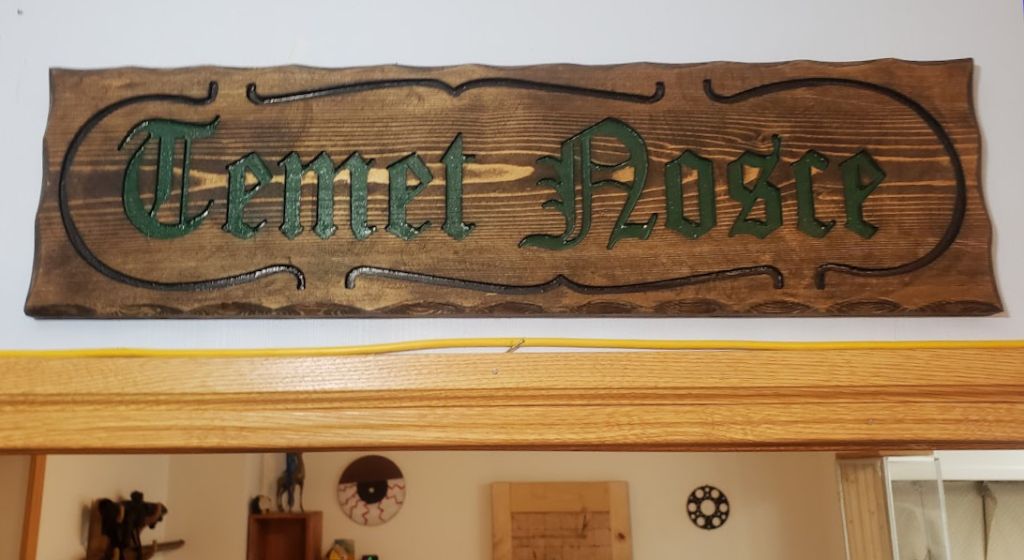
Temet Nosce
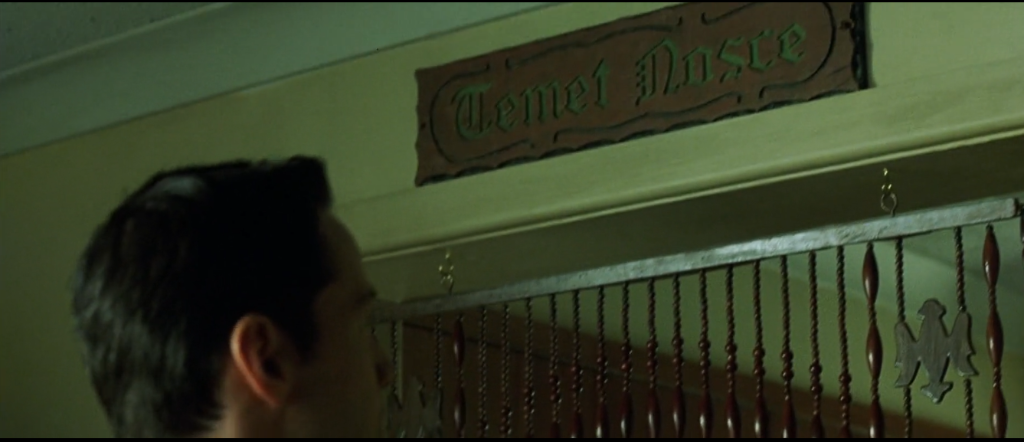
“Through and through. Balls to bones.”
Full DXF: temetnosce.dxf
Tip: Save yourself a lot of fiddly work: Paint the inlays, then sand, then stain
.

Full DXF: temetnosce.dxf
Tip: Save yourself a lot of fiddly work: Paint the inlays, then sand, then stain
.
 |
 |
|
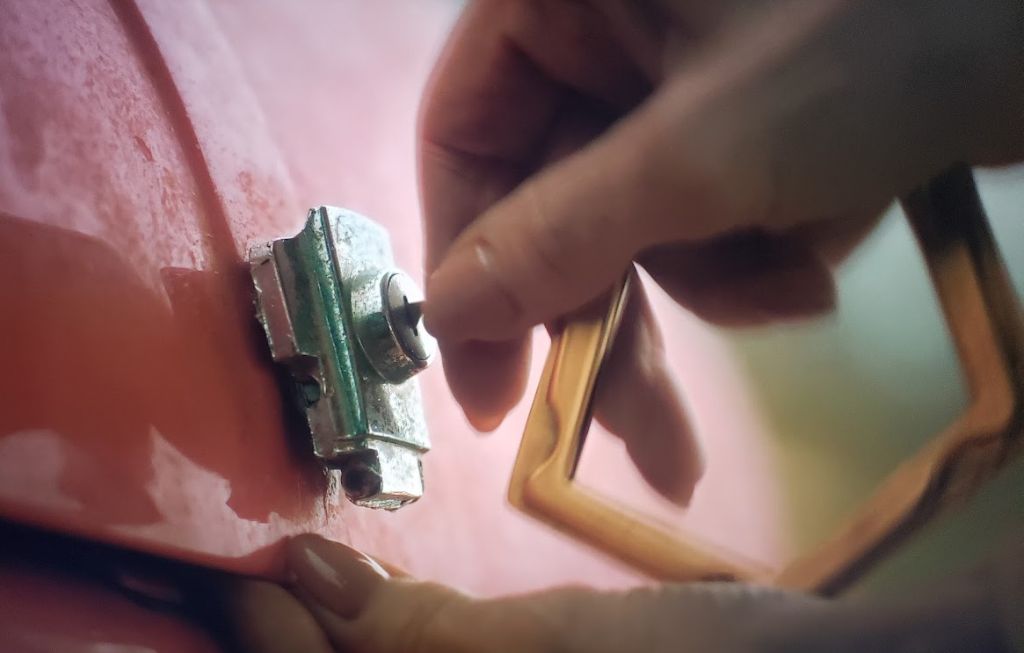
| “I’m always amazed people think valet keys will keep anything safe” – Matsumoto | ||
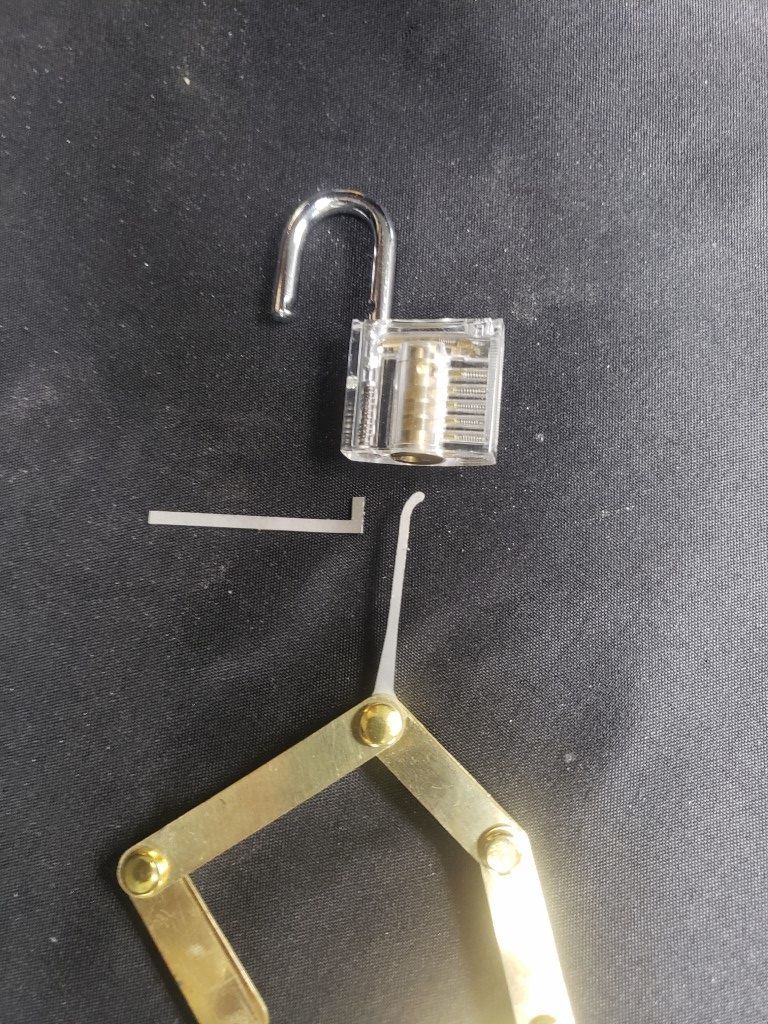
Watching Cowboy Bebop (Live action), there’s a shot where Faye’s mother Matsumoto slips off her bracelet, and hidden within is a lock pick set! I immediately fell in love with the concept, and started planning out the build in my head.
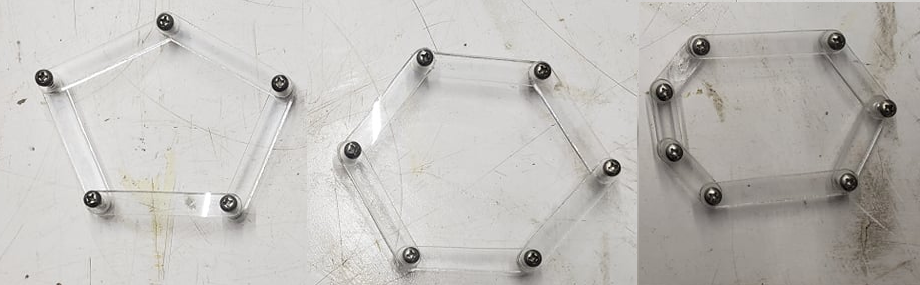
The first step was to work out rough sizing. I drew a circle in Solidworks and laid out a pentagon around it – matching the design from the show. Solidworks is pretty pricey if they don’t sponsor your Hackerspace with a license (Thanks Dassault!), but you don’t actually need it – I just used it because it was a quick way for me to get a basic idea. I laser cut the parts out of scrap plexiglass, built a few test bracelets in different sizes, and they were all terrible. Turns out wrists aren’t pentagon-shaped, so the corners constantly caught on things, and the whole bracelet was far too bulky. While accuracy was a priority, I wanted to make this real, and real meant usability was the main priority. After playing with a few different polygons, I settled on a hexagon as the most comfortable shape. If you want to go with the original pentagon, you should be able to modify your part order to do so. I believe in you!
The drawings are sized to my 6.5″ wrist, but these plans should work for anyone with wrists between 5.5″ and 7″ in circumference. If you have larger or smaller hands then that, you can modify the DXFs and get a perfectly sized bracelet, but I recommend doing a test piece before ordering (even if it’s just printed out on paper and cut with scissors, having a tangible representation is super helpful). After working out the body of the bracelet, I had to design the picks themselves. I could claim I did a bunch of engineering and research… but I didn’t. I googled some pictures of a rake and a hook that looked like my favorite pics, and traced them in Inkscape. As dumb as it is, Inkscape is my favorite 2d cad program for doing anything artistic, and it’s free. Just make sure to export your DXFs in “inches” or “mm” and not “pixels” – or your SCS order (more details on that soon) will be far more expensive and comically large. To complement the pics, I needed a removable tension wrench. This isn’t shown in the show, but in my goal of making it usable I decided to go for it.

So. Design is great and all, but how do we make this real? That’s a lot of metal shaping, and I sure don’t have a laser that can punch through a brass… But do you know who does? SendCutSend! SCS will take your DXFs, turn them into metal parts, and send them to you for a very reasonable rate. I swear this isn’t a sponsored post…. but I am trying to suck up enough to get a SCS sponsorship for a BattleBot, so….. Moving on! I’ve used SCS for personal projects for a long time, and love how much time it saves. And I’m about to save you a bunch of time, because I’ve uploaded the entire bracelet partslist into a public cart, so you can order them without uploading the files manually. There’s always coupon codes for 10-20% off, so do a quick search for those before you order (or try NORUSH15). I think the order comes to about $22 (very reasonable!), but there’s a $29 minimum order. I deeply recommend just drawing something fun in inkscape and uploading it to get your cart over the $29 mark.
Pick parts:
Magnets: https://www.amazon.com/gp/product/B076RV524B/ – optional, see below.
Rivets: https://www.amazon.com/gp/product/B08W36NNH1 – This was enough to do 2 bracelets, in brass, with enough extra rivets to last me years.
| Your send cut send order should look something like this! This is parts for two bracelets and a a disk for another project. |
 |
|
|
First, file the edges of the brass components. There’s a little edge where the laser starts/stops, leaving a sharp spot on each piece. Luckily, a few seconds with a file or sandpaper will take care of it.
|
 |
|
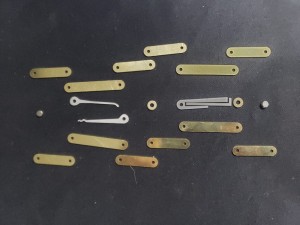
| Next, we want to lay everything out. It’s very important that we have the long brass sides immediately over and under the picks / wrench, this keeps everything tight and held in. The rest of the layout follows from that. I was trying different magnets in this picture, but the layout is correct. |
 |
|
 |
||
 |
||
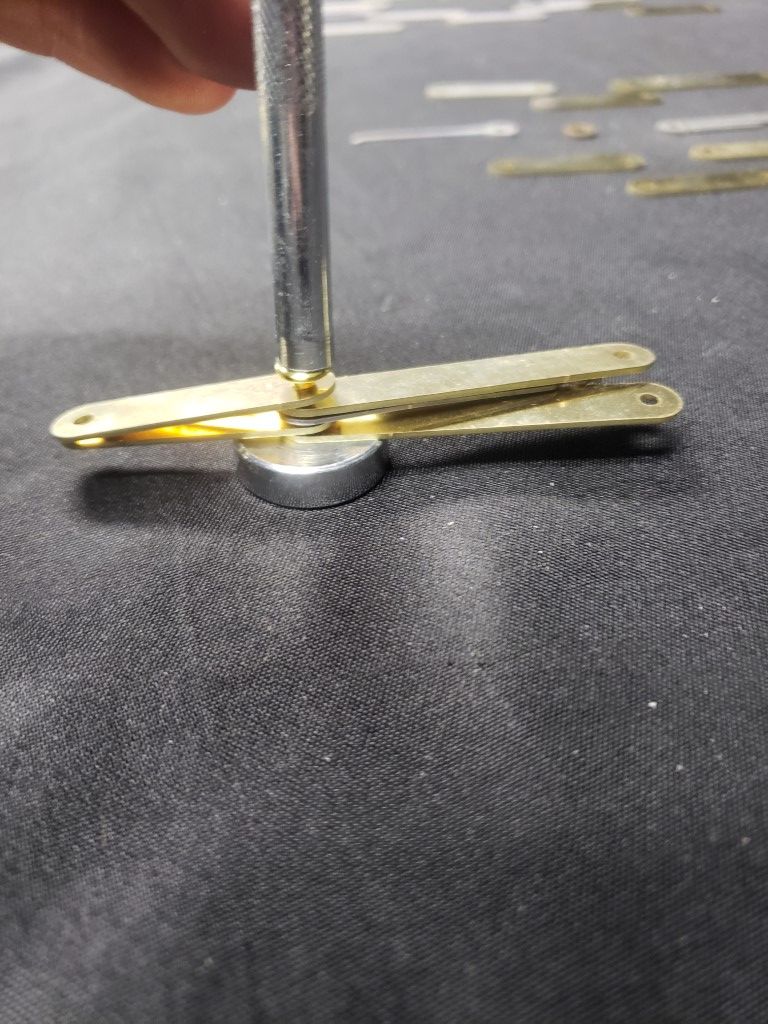
| Now, we’re going to rivet everything together. I chose to start with the lockpicks, work towards the wrench, and then do the endlinks. Thread the rivet through all the layers, put a cap on it, lay it in the anvil, and bash it decently hard. I was worried it would take a delicate hand, but I just smashed it until it was flat and it worked great. Despite what I show in the image, I didn’t even use the press tool, just whacked the rivets directly. (Note, You’ll notice I messed up the layout here. I make these mistakes so you don’t have to!) |
 |
|
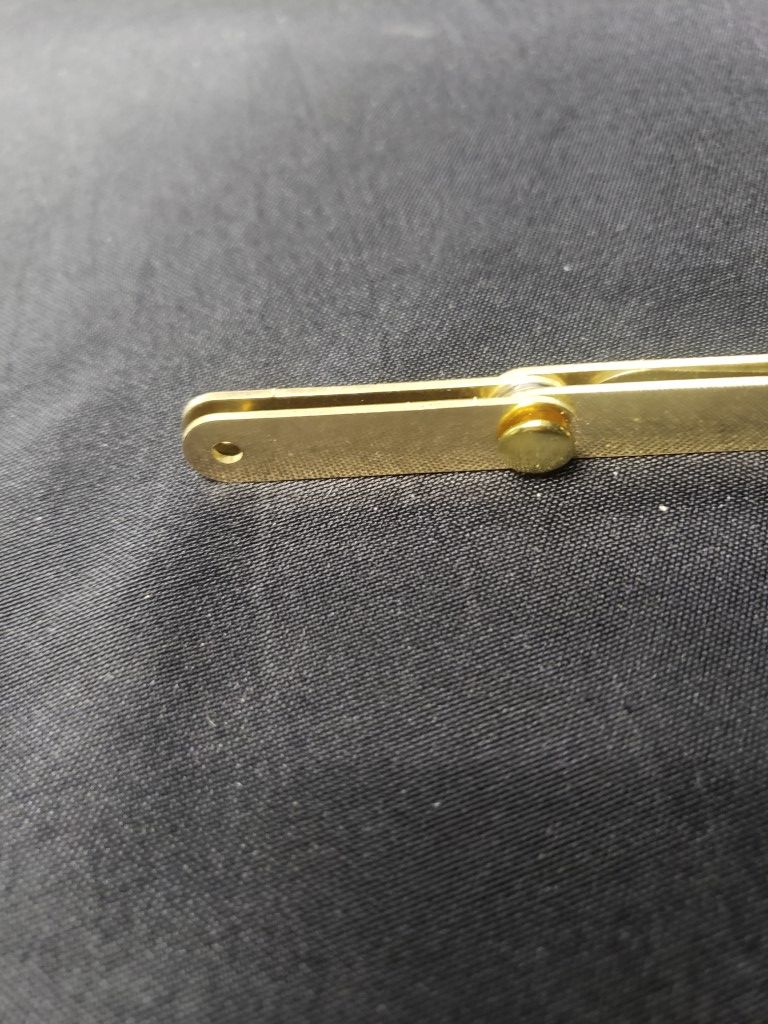
| Now, repeat this the whole way around the bracelet! |
 |
|
| For my Bracelet, I lathed a turned a cylinder with nubs for the closure on our lathe. |
 |
|
Now that you are at the ends, you have to make a choice.
You can mock up the options before you attach them to see how they feel, but either way, just rivet them on there like you did the rest of the bracelet. I was afraid they’d be brittle and shatter when being hammered, but they took the beating just fine.
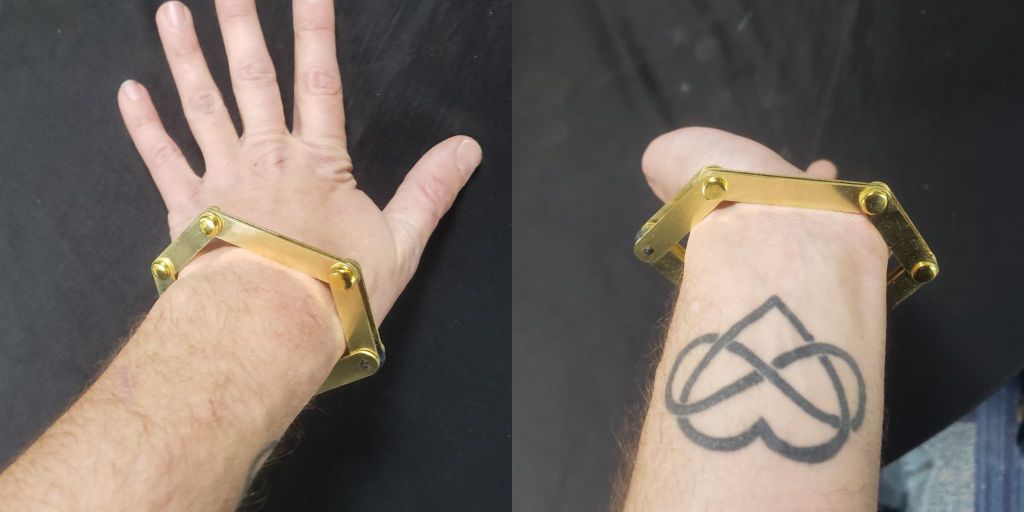
That’s it! Now onto the next project: Learning how to pick locks.
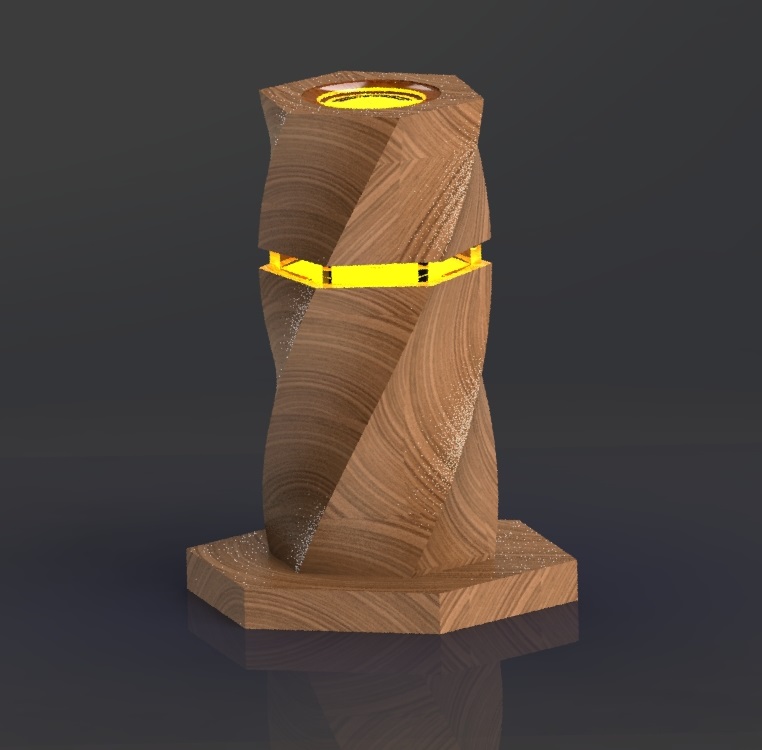
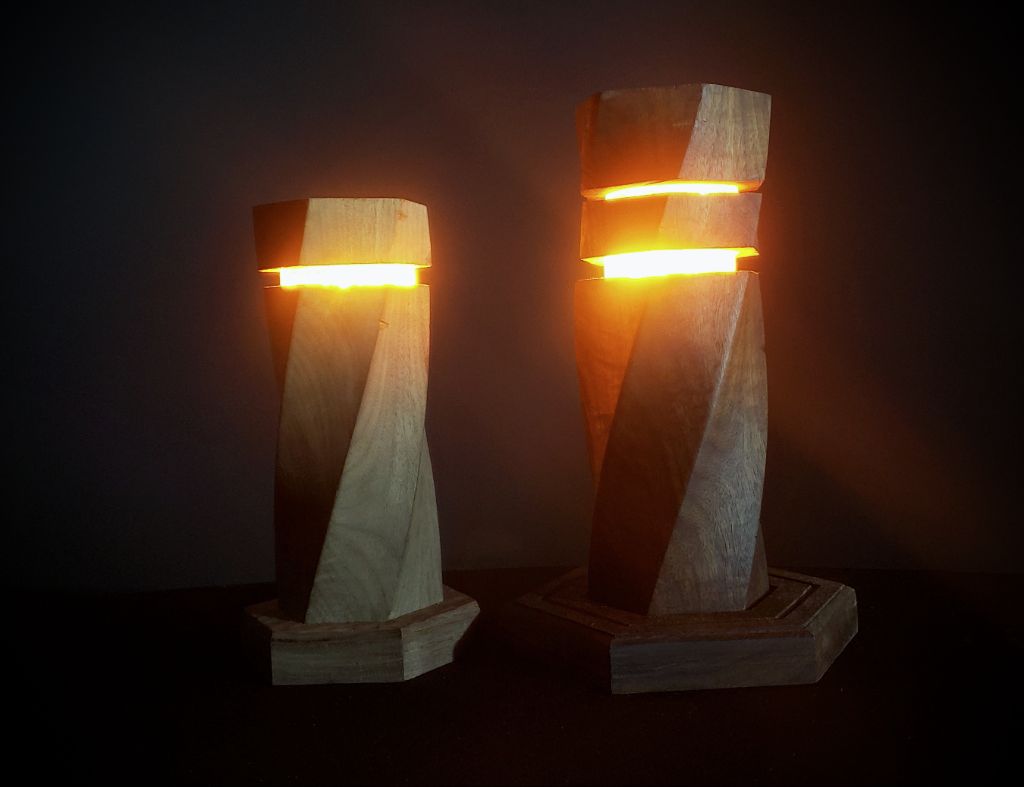
I’d designed a very cool looking accent lamp. The only problem was, this lamp needed to be milled on 6 separate sides. I considered using a rotary table and hand-milling it, but that was going to be a very tedious process, so I set about dividing it into portions that could be CNC’d three sessions.
The first problem was I need to create a reliable way to index the part in a given rotation. This was solved by creating some hexagonal end-blocks, and creating a socket for the end blocks to sit in.
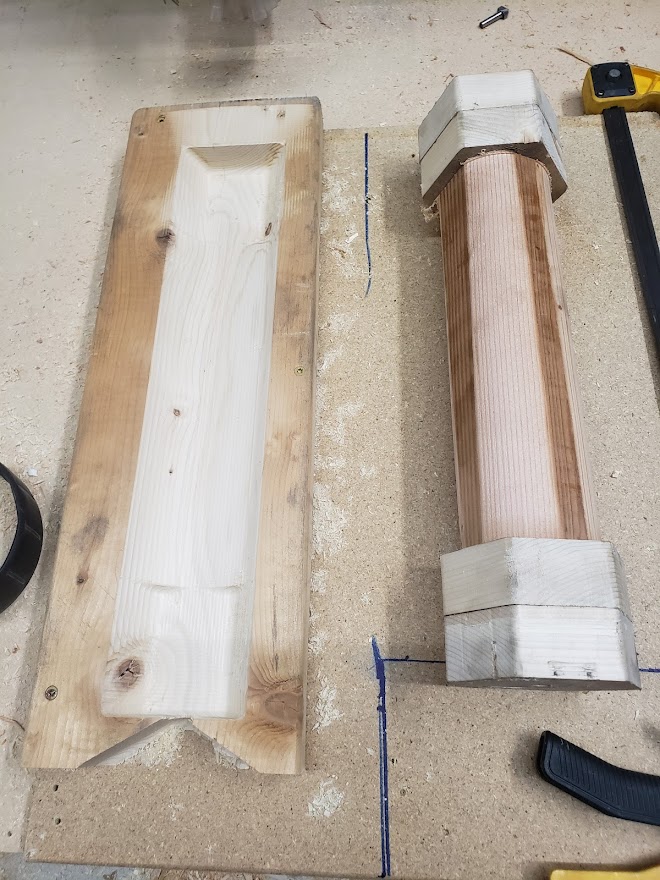
Now, I was able to export only the upward-facing edges and CNC those! Then I could rotate the part 120* and repeat, milling all the sides.
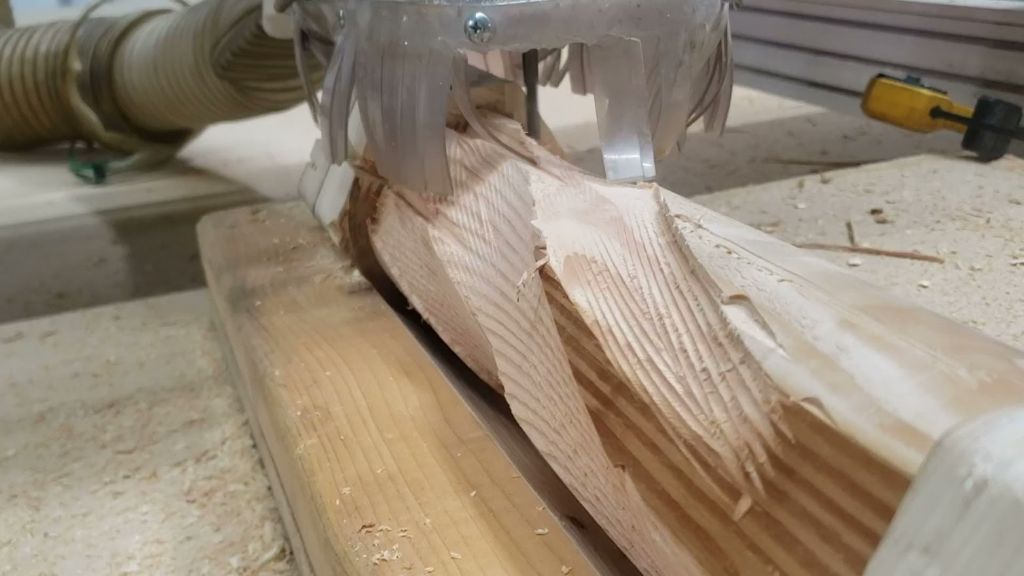
However, this had some problems. Testing on some scrap 4x4s showed revealed that the corners had major issues. Minor inconsistencies in placement, combined with the CNC’s desire to mill the steep near-vertical portions of the faces, resulted in a product I couldn’t be proud of. The basics of the approach were good, but had to be refined.
The first improvement was instead of doing the upward facing sides, I singled out one face of the twisted hexagon – and milled it in six sessions. This resulted in a far better piece, but it still had issues on the edges – I couldn’t rely on the faces lining up perfectly. After a lot of fiddling, I realized I didn’t have to limit the shape to the final shape I wanted – instead of designing the “positive” end result, I needed to design the “negative” material removal – and this material removal could overlap. I expanded the single face to the left and right, creating a “wider” face on one side of the hexagon, and isolated that new wider face. Now, when I routed this face the routing would continue off both sides of the face into free air. Instead of precisely placing the edges, I could create overlapping faces and let the edge form naturally by their intersection.
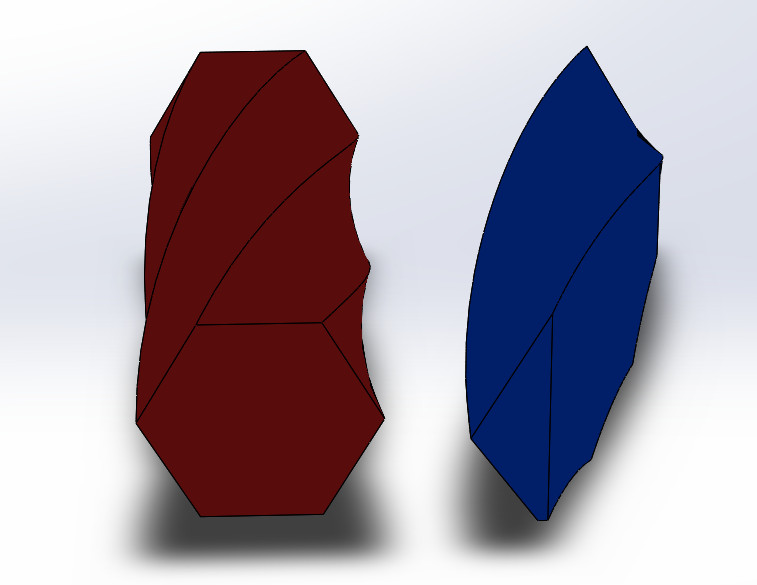
This did the trick! Although slower due to additional rotations, and many passes “removing” wood that had already been removed when milling other sides, this resulted in sharp, crisp edges that naturally followed a perfect curve down the body of the lamp.
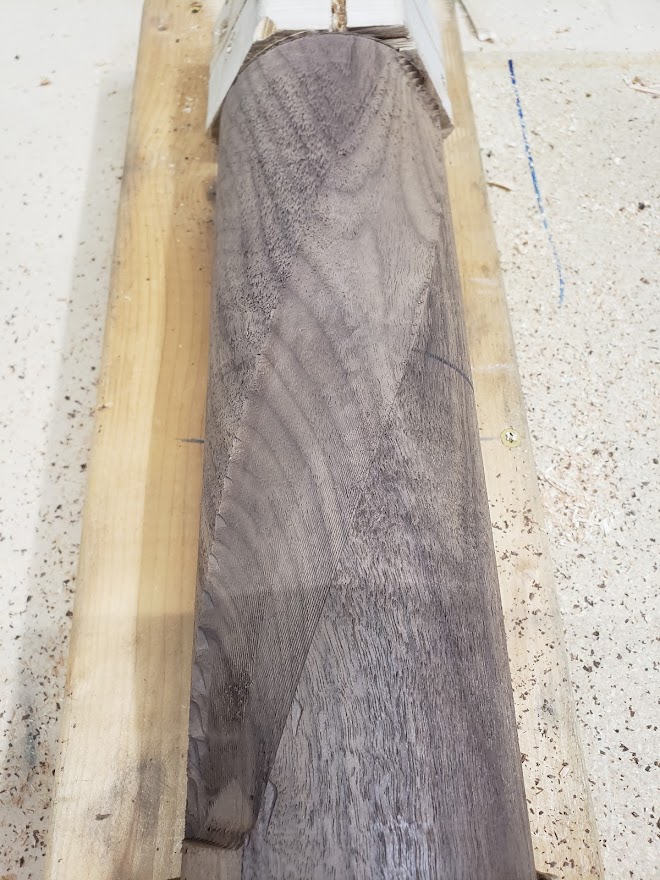
After a lot of milling, sanding, and a trip to the local glassblower, the lamp was done! Great success, and a great learning experience.
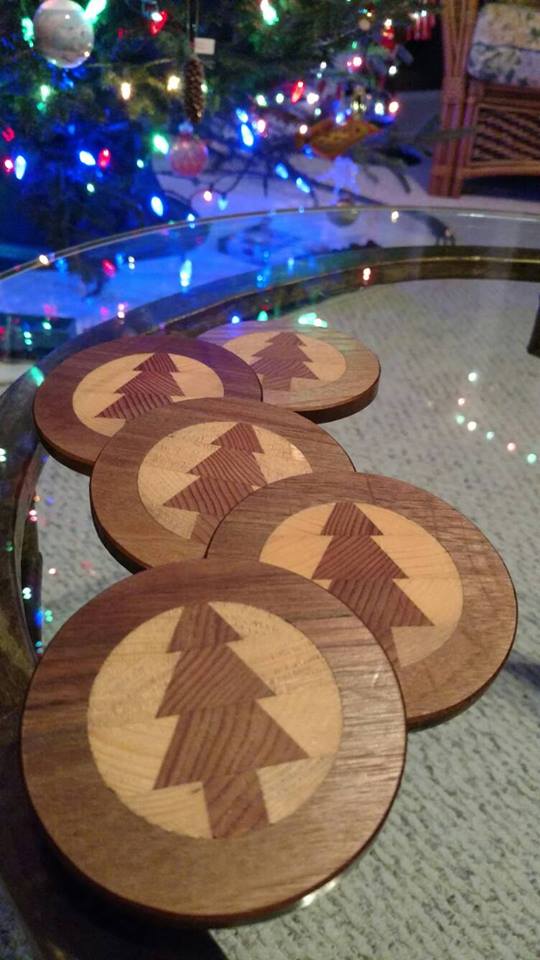
Merry Christmas from Baltimore Hackerspace! (Christmas present and member project: Cedar inlaid wooden coasters!)

Merry Christmas from Baltimore Hackerspace! (Member project and Christmas present: rolling storage bench!)